The sodium-ion battery is a type of rechargeable battery analogous to the lithium-ion battery but using sodium ions (Na+) as the charge carriers. Its working principle and cell construction are almost identical with those of the commercially widespread lithium-ion battery types, but sodium compounds are used instead of lithium compounds. Sodium-ion batteries have received much academic and commercial interest as a possible complementary technology to lithium-ion batteries, largely due to the uneven geographic distribution, high environmental impact and high cost of many of the elements required for lithium-ion batteries. The largest advantage of sodium-ion batteries is the high natural abundance of sodium. This would make commercial production of sodium-ion batteries less costly than lithium-ion batteries Replacing lithium and cobalt in lithium-ion batteries would result in a more environmentally and socially conscious technology, scientists say. Toward that end, University of Texas at Austin researchers have developed a sodium-based battery material that is stable, can recharge as fast as a traditional lithium-ion battery, and has the potential for a higher energy output than current lithium-ion battery technologies. Ions in batteries travel between the negative anode and positive cathode when generating electricity. In sodium-based batteries, anodes can develop filaments called dendrites that could cause electrical shorts and increase the chances of a fire or explosion. This new sodium-based technology resists dendrite growth and recharges as fast as a lithium-ion battery. The team published the results in the journal Advanced Materials.
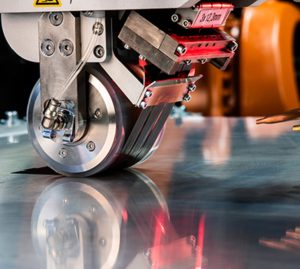
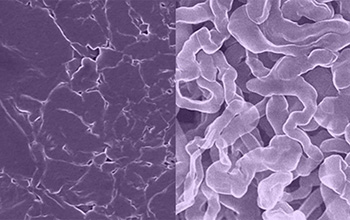
The anode material is made by rolling a thin sheet of sodium metal onto an antimony telluride powder and folding the sheet repeatedly, resulting in a uniform distribution of sodium atoms that resist the formation of dendrites and corrosion. The process also makes the battery more stable, with a charge rate similar to a lithium-ion battery and potentially a higher energy capacity.
The authors essentially solved two problems at once. Typically, the faster you charge, the more of these dendrites you grow. So, if you suppress dendrite growth, you can charge and discharge faster, because all of a sudden it’s safe.
The demand for stationary energy storage systems is high and rising. This technology could provide a stable, sustainable and less expensive solution. The researchers have applied for a patent on the technology.

Reference
Yixian Wang, Hui Dong, Naman Katyal, Hongchang Hao, Pengcheng Liu, Hugo Celio, Graeme Henkelman, John Watt, David Mitlin. A Sodium–Antimony–Telluride Intermetallic Allows Sodium-Metal Cycling at 100% Depth of Discharge and as an Anode-Free Metal Battery (Adv. Mater. 1/2022)