Solar energy is the cleanest and most abundant renewable energy source available. Current technologies for harvesting this most vast resource involve the use of a photo-voltaic (PV) module, colloquially referred to as solar panels. Technically, the generation of electricity of PV panels is dependent on the adsorption of sunlight. As renewable energy is widely accepted, more and more large-scale or utility-scale solar power plants have been built and operated. Consequently, this makes the issue of dust soiling urgent especially for those regions with ample solar resource but arid climate. Basically, the negative effect of dust soiling eventually results in the declining performance of PV panels due to the buildup of dust particles on outer layers of those surfaces. Thus, to prevent further buildup of dust particles, various mitigating strategies have been developed to address the issue of soiling. Noteworthy literature that in recent times demonstrated that surface morphology (whose characterization requires the introduction of various surface morphological parameters such as average roughness and root-mean square) is a key factor for various engineering applications.
Adept authors have already demonstrated that the frictional behavior between contact surfaces is influenced by skewness and kurtosis under different regimes. Yet, lacking from literature is the fundamental understanding in interactions between a brush, dust particles, and the surface of panels. On this account, researchers from the Texas A&M University: Eugene Yu-Ta Chen, Yan Chen, Bing Guo and led by Professor Hong Liang investigated the correlation between surface morphological parameters and cleaning efficiency. Their work is currently published in the research journal, Solar Energy.
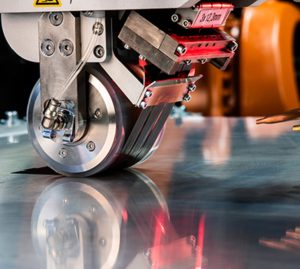
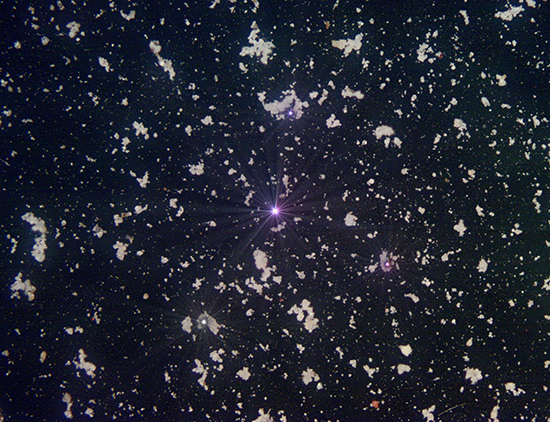
In their approach, they evaluated the correlation of cleaning efficiency of five different surfaces with various surface morphological parameters using a tribometer with brush-on-disk configuration. Overall, they analyzed the cleaning conditions such as the surface roughness and the shape of the surface profiles. Lastly, the researchers presented a physical model illustrating the proposed cleaning mechanism.
The research team reported that their results demonstrated two key factors affecting the removal of dust particles resulting in ineffective cleaning, i.e. the roughness of the surface and the profile. Moreover, they acknowledged that the dust particle removal involved consideration of the brush and particle size, as well as the panel surface morphology and texture.
In summary, the study presented an in-depth assessment of the correlations between the cleaning efficiency and the surface morphological parameters. The researchers adopted an established method, i.e. the brush-on-disk configuration, to evaluate the cleaning efficiency of five different surfaces of aluminum oxide. The results obtained showed that surface morphology has profound influence on the cleaning efficiency in three aspects. “Understanding the dust-surface interactions is the first step to develop a low-cost solution in using solar energy,” according to Professor Hong Liang. In a statement to Advances in Engineering, she highlighted that their work significantly introduce new knowledge that not only applied to maintenance of PV panels but also to other industrial cleaning applications such as food processing, medical devices, and structural materials design and fabrication.
Reference
Eugene Yu-Ta Chen, Yan Chen, Bing Guo, and Hong Liang. Effects of surface morphological parameters on cleaning efficiency of PV panels. Solar Energy, volume 194 (2019) page 840–847.